“Trespassing,” at the Asian American Literary Review

Fresh off the press is the Spring 2012 edition of the Asian American Literary Review.  A short story I wrote is in this issue (“Trespassing”), so there’s no better time to support these good folks.  You’ll also find works by Ed Park and Ed Bok Lee, and even some writers not named Ed.  Check out the table of contents and the sampler and order yourself a copy!


Faith, at THE2NDHAND TXT


I first encountered THE2NDHAND when I bought a used book online.  I can’t remember the book, but I do remember a broadsheet I received in the envelope, a fine short story by Patrick Somerville.  It turns out that they also have a website where they post short stories, and they ended up liking “Faith” enough to put it up.  I read an excerpt of this story at the Sulu Reading series in NYC, which was almost two years ago…?  Man, where does the time go.  Anyway, you can now read it in full.  Much thanks to Rhian Ellis for writing After Life, which inspired this short story.

World Famous in Poland – Paryż nocą

That’s a quote from a movie, by the way — To Be or Not to Be, a Mel Brooks film.  Somebody asks Ann Bancroft, who plays Brooks’ wife (who also happens to be his real-life wife), about her actor husband, and she tells them, “He’s world famous in Poland!”

Now I’m proud to say that I, too, am world famous in Poland, thanks to Marcin Kucharski.  He liked my story “Paris, at Night” enough that he wanted to translate it to his native tongue.  So for those literate in Polish, give my story a read.

Paryż nocą

Dziś był dzień ryżu, 20. kilogramowe worki ryżu w ciężarówkach z logo słonia. Dokładnie ten sam słoń pojawia się na torbach- z głową podniesioną ku niebu i trąbą wykrzywioną w kształt litery S.

  • Słoń – powiedział Todd

Powiedział to, gdyż jakiś pracownik gapił się bezustannie na logo. Oznacza to, że się obijał.

  • Właśnie! – wykrzyknął mężczyzna. – Nie mogłem przypomnieć sobie słowa.

[more]

Drifting House, by Krys Lee

Check out my review of Krys Lee’s excellent collection of short stories, Drifting House, in today’s issue of the Financial Times.

In her powerful debut collection, Drifting House, Korean-American author Krys Lee plumbs the darkness on both sides of this divided nation. Indeed, an alternate title for this volume of nine stories might have been “Koreans in Trouble”; these are people in dire straits – be it a father who loses his job, his family and his sanity, or a young girl with an incarcerated mother. The stories – some set 50 years ago, others in the present day – are steeped in Korean culture, history and food.

Let’s Call the Whole Thing Off

I thought it might fun to usher in the new year by watching the film 2012.  Neither my wife nor I had seen it, and since this year has been purported to be the end, why not?

We had a great time.  It’s Hollywood by the book, but oh, the carnage!  I couldn’t get enough, and was so inspired that we kept going with more doomsday picks.  As always, haikus to the rescue.

It ends with a bang:
an orgy of destruction
and it’s fun to watch.
A procedural
in planetary wreckage
‘Nauts to the rescue.
It begins like art
light, funny, then turns Lars-dark
Yes, depression sucks.

Favorite Songs of 2011

"Some New Jersey Dawn..."

Here’s a list of my top songs for this year, in an order that might be surprisingly mixable. These are not necessarily from 2011; I just happened to have heard them in the last twelve months.

“Payback Time,” by East River Pipe on We Live in Rented Rooms
“A Heart Divided,” by Holly Throsby on A Loud Call
“Sweet Disposition,” by The Temper Trap on Conditions
“Americano,” by Lady Gaga on Born This Way
“You’re Not Stubborn,” by Two Door Cinema Club on Tourist History
“Stranger,” by Lissie on Catching a Tiger
“Cruel,” by St. Vincent on Strange Mercy
“The Day,” by Moby on Destroyed
“Box of Stones,” by B.F. Leftwich on Last Smoke Before the Snowstorm
“Job’s Coffin,” by Tori Amos on Night of Hunters
“Bluebird,” by Christina Perri on Lovestrong
“Mylo Xyloto/Hurts Like Heaven,” by Coldplay on Mylo Xyloto
“Dance, Dance, Dance,” by Lykke Li on Youth Novels
“Rolling in the Deep,” by Adele on 21
“Club Can’t Handle Me,” by Flo Rida featuring David Guetta on Only One Flo Pt. 1
“Never Gonna Leave Me,” by Sia on We Are Born
“Change of Seasons, by Sweet Thing on Sweet Thing
“Portable Television,” by Death Cab for Cutie on Codes and Keys
“The Cave,” by Mumford & Sons on Sigh No More
“Mistakes,” by Mates of State on Mountaintops
“Torch Song,” by Priscilla Ahn on When You Grow Up

The song that has most intrigued me this year is the first on the list, “Payback Time,” by East River Pipe.  So intrigued that I transcribed the lyrics below:

Yeah, I saw you walking with the commandant
Yeah, he buys you everything he thinks you want
But after food and wine and small talk on the Rhine
he says it’s payback time

Yeah, Jean-Paul took you on long cross-country trips
Yeah, Voltaire and Kierkegaard fell from his lips
of steal
But something went awry as love started to die
he said it’s payback time

Just wait, I’ll come along
on some New Jersey dawn
I’ll say payback time

I can’t find the lyrics online, but the singer is pretty clear.  The only part that’s in question is what I have in bold.  I imagine the first stanza describing a situation in a concentration camp (commandant, Rhine, etc.).  In the second stanza, the “you” is a woman, and the singer has lost her to Jean-Paul (hence, the lips of grammatically incorrect “steal”).  The third stanza is a bit of a mystery.  Our narrator will be coming for his girl at some undetermined morning, but whose payback is he talking about?  Jean-Paul’s?  Hers?

Of course, for all I know, the song has nothing to do with anything I’ve said above.  Whatever.  It’s a great tune, and I like thinking about it.

Veronica, by Mary Gaitskill

Two years ago, I had Mary Gaitskill sign a copy of her second novel, Veronica, at the Brooklyn Bookfest.  I’m not a fan of buying books at list price — you’d think that as a writer myself, I’d be supportive of paying full retail, but no, I’m a cheap bastard at heart and would’ve preferred to have purchased it off of Amazon.  But I hadn’t realized she’d be there, so I bought a copy and stood in line.  And it was a line, at least a dozen people ahead of me.

When my turn came, I told her how much I enjoyed her first novel, Two Girls, Fat and Thin.  It wasn’t a perfect book, but I liked how she juggled a story of a complicated relationship between two unevenly-matched women (one pretty, one not) and also a satire of Ayn Rand’s Objectivism.  The book wasn’t particularly well received, but it was a worthy effort, and nonetheless enjoyable because Gaitskill takes great care to craft her prose.  So even when the plot goes offline a bit, she can always fall back on her gorgeous sentences.

Veronica is her second novel, and it was praised lavishly, becoming a National Book Award Finalist in 2005.  Like most books I read nowadays, it took months for me to get through it, but it’s funny — with Veronica, the pace seemed right.  There’s a structure to the novel, with the current timeline occurring within twenty-four hours, but really, this is a novel of memory, so within a matter of a few sentences in a single paragraph, we may rocket through twenty years, so we’re not talking about a continuous narrative in the traditional sense.  I must’ve stopped and started this book a hundred times, reading two or three bites of pages, but I never lost my place or forgot any of the characters.

The story is simple: Alison, now almost fifty, narrates her tumultuous story of modeling in Paris and New York, her bad relationships with men, and her parents and two sisters.  So who’s Veronica, and where is she?  She’s a woman Alison meets when she temps in a office in between her modeling, but Veronica really isn’t in the first half of the book.  Gaitskill keeps reminding us of her eventual entrance, though, as Alison recalls slivers of her within her remembrances.  Veronica begins to become prominent midway through the novel, and then in the last third, she becomes a tragic focal point.

If you’ve read Gaitskill before, nothing here will surprise you, content-wise.  There’s violent, ugly sex rendered with great beauty, characters with enough self-hatred to depress the self-help sections of any bookstore, people who seem to exist for the sole sake of experiencing misery.  If you haven’t read Gaitskill, you might want to start with her short story collections, because she might go down easier at shorter doses.

But for me, I love this torture of a novel.  It feels as if she was less concerned with the mechanics of writing a longer work this time around, and it was the right choice.  My only wish is that it stops on page 245.  There are some loose ends that are tied in the last section, but in a book like this, loose ends would play even better.

Cheers to Josh and Kimora

I’m at the bar from television’s Cheers, sitting catty-corner from Norm’s usual spot.  The door slams open, and Josh Charles, the actor who plays Will Gardner on The Good Wife, rushes in.

There’s a table to the right of me, and there are two men sitting hunched over.  I’m not sure what they look like because all I see are the backs of their heads, but I know they are writers.  They are scribbling furiously on legal pads.

Josh Charles starts berating them.  “You think this is work?  This is nothing!”  He slams his hands on the table.  “You should both go out there and break rocks, that’s what you should do!”  He’s screaming at them, but these men don’t seem to hear him, because they just keep on writing.

The door slams open again, and an Asian woman enters the bar.  She’s laughing.  She’s the daughter of Kimora Lee Simmons, the lady who was married to Russell Simmons a few years back.  Except this daughter looks exactly like Kimora herself.

Still laughing, she runs over to Josh Charles, who takes her in his arms, giddy himself.  He turns to me and says, “You know, I’m half Asian.  Look at me a certain way, you see it.”

And sure enough, Charles leans back in his chair, and the lights above paint his face at such an angle that I see it, too: his hair darkens, his eyes narrow, he’s Asian.  And something else: he’s turned almost black and white, like an old photograph.

* * *

I don’t usually write about my dreams, but this was very vivid and incredibly strange.  I hadn’t seen The Good Wife in a couple of weeks, so why was Josh Charles on my mind?  (Who’s an awesome actor, by the way — sorry for dragging you into this.)  And truth be told, I don’t even know what Kimora Lee Simmons looks like.  (Or her “daughter” — which wasn’t even a question, by the way.  I knew it was her daughter, however impossible it seems now.)  The Cheers setting makes sense, as I watched the Ted Danson bit on CBS Sunday Morning a few days ago, and they played footage from the show.

But the rest of the stuff is pure crazy dream logic, which is as entertaining as it is baffling.

The Bad, the Worse, and the Worst

I suppose I was in a vegetative mood, because I spent an inordinate amount of time watching bad movies this past week. Some were chosen for their badness; others just turned out that way.

Road House

Dalton the bouncer
does tai chi without his shirt
and kills half the town.

The level of acting in this movie is just incredibly bad.  I’m not talking about the leads, Patrick Swayze and Ben Gazzara, but the folks who have three or four lines.  A movie like this made today would feature better secondary actors, which leads me to believe that the acting profession has markedly improved in the last twenty years or so.

I was surprised at how violent this film got towards the end.  I guess I shouldn’t have been, but ratings do tend to soften with time (like Midnight Cowboy bearing a ridiculous X rating).

  ShowgirlsDog Chow and Ver-sayce
Cavalcade of T & A
This is not acting.

The lines are ridiculous, the acting is so over-the-top that it would clear Mount Everest.  But one thing you cannot say about this movie — it is never boring, and therefore, I’d highly recommend it.

  MacGruberWhat this film needed:
toothpick, tube sock, bubble gum
and a few more jokes.

There were a few moments where I laughed, but the movie just isn’t funny enough.  The highlight without a doubt is Ryan Phillippe paging through MacGruber’s journal.

  Legend of the Fist: The Return of Chen ZhenClick the Fast Forward
when watching this non-action
film in record time.

Jet li’s Fist of Legend is my favorite Chen Zhen story.  I’m a huge Donnie Yen fan — if you haven’t seen Kill Zone or Flash Point, they’re absolute gems.  This one had a few nice action sequences, but the rest of the film is forgettable.

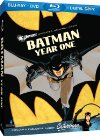
  Batman: Year OneBryan Cranston makes
a gruff Lieutenant Gordon
to a weeny Wayne.

A faithful adaptation of the Frank Miller graphic novel.  It’s a decent film, but the guy who does Batman’s voice is wrongly cast.

  The Wicker Man (2006)Some films are so bad
their ineptitude is good.
I wish this were worse.

The scenes of this movie that are on YouTube, such as Cage beating up Leelee Sobieski in a bear suit, are funny, but the humor unfortunately is derived from their lack of context.  There’s no question the scene is silly, but within the movie, it makes more sense, and therefore, not really funny.

This actually was not a bad movie for the first half of its runtime.  And even the latter half isn’t a total failure — it was more along the lines of being ill conceived.  Let’s just put it this way: it’s no Showgirls.

The Fast Food of Life: Terrence Malick at McDonald’s

The Tree of Life, Terrence Malick’s latest masterpiece, is out on home video today. I’m a big fan of Malick, especially The Thin Red Line, but I was not exactly enamored with The Tree of Life. I don’t think Malick is capable of making a bad movie — film is first and foremost a visual medium, and his visual chops are off the charts. Still, once you get past the gorgeous cinematography, there’s just not much life in Life. The dinosaurs and cosmos interstitials are impressive, but ultimately, they serve as window dressing and not much more. Malick’s use of voiceover has never felt more self-conscious than in this film. I’ve read that this is his most personal work, and maybe that’s why it also comes off as his most precious. Again, it’s not a bad movie, but it’s not exactly a good one, either.

Now as for what appears below: I’m not exactly sure why I imagined Malick waiting at a McDonald’s, but it just sort of fit. Most of this pseudo-poetry is straight from the movie, with a few clusters of words rearranged and/or added.

The Fast Food of Life: Terrence Malick at McDonald’s

Brother.
Mother.
It was they who led me
to your Golden Arches.
And to this forsaken ordering line.

A man’s heart has heard
two ways through lunch…
the way of the Chicken McNugget
and the way of the Big Mac.

You have to choose.
The Chicken McNugget doesn’t try
to please itself.
Accepts being trimmed
fried, dunked in savory sauces.

The Big Mac only wants
to please itself.
Like this idiot
at the counter
paying entirely in change.

You can read the rest at The Nervous Breakdown.