Love Love in San Francisco Magazine (9/2015)

A hearty thank you to San Francisco Magazine for giving some love to Love Love:sanfranmag_ll

The full text:

Get lost in an oversexed San Francisco

Sung J. Woo, author of the highly lauded Everything Asian, has a new novel on a slightly different subject.  Love Love (Soft Skull Press) finds 40-year-old tennis coach Kevin Lee grappling with the discovery that not only was he adopted, but his biological parents were porn stars in ’70s San Francisco — a lot to take in for a man in the midst of a midlife crisis.

The portion of the bald head you see below my little snippet belongs to none other than Salman Rushdie!  If that wasn’t amazing enough, I’m also sharing space with Jonathan Franzen’s Purity and Billy Joel.  The entire page appears below.

sanfranmag

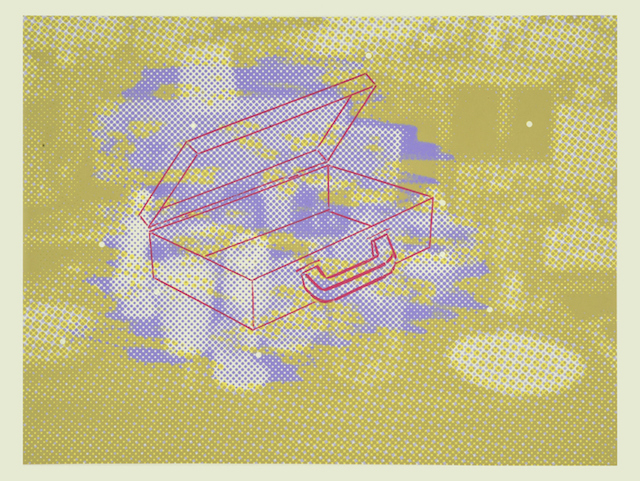
The Suitcase, on The Margins

Coldwell-StillLifeSuitcase-sung-woo

Still Life with Suitcase, Paul Coldwell (aaww.org)

‘Our apartment, our home, became an unfamiliar space. We still slept in the same queen bed, but no longer did we speak of upgrading to the capacious king. We could now easily fit two additional people in the valley of the bedsheet between us.’

It’s Fiction Friday at AAWW’s The Margins, and I’m so very proud to have my story up there.  It’s titled “The Suitcase,” and the first decent draft of this story that was sent out to various journals was back in April 12, 2007.  That is not a misprint — this story has been waiting for a home for eight years.  I never gave up on it, rewriting it at least a dozen times.  The original version ran almost 5000 words.  The published one runs around 3500.  I guess I finally figured out how to leave out all the bad parts.

Huge thanks to Anelise Chen, the fiction editor at The Margins, who gave me such great critiques and suggested a new beginning.  Thanks also to Mary Gaitskill, who held a master class at NYU a couple of years back.  Lucky for me, this story was one of the ones she chose to workshop; I still have the manuscript she marked up in my files (tiny print in pencil!).  And finally, thanks to Michael Bahler, who edited an earlier version and helped me reshape it and make it so much better.

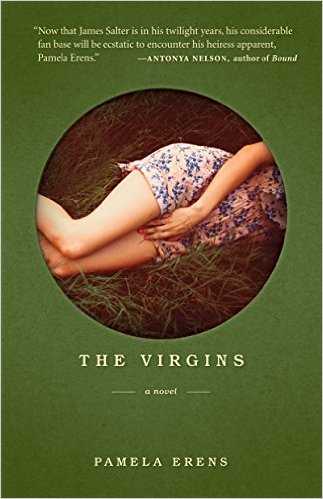
The Virgins, by Pamela Erens

virgins

The Virgins, by Pamela Erens

I’m on a roll here, folks.  A week ago, I finished reading Wendy Lee’s Across a Green Ocean, the first published novel I read this year.  And now here I am, merely a week later, with another notch on my belt.  I’m almost two years too late, as Pamela Erens‘s The Virgins came out August 2013, but I’ll say it again: better late than never.  (I think that might be the phrase that goes on my tombstone.)

Firstly, let me say I know Pamela personally to a very slight degree; we have friends in common so we’ve met during family-related/neighborly celebrations.  And I was at one of her book parties when The Virgins came out.  “I can’t wait to read it!” I’m fairly certain I said (lied).  I’m sorry, Pamela — I’m just really, really slow.

Have I apologized enough?  Probably not.  But it’s time to move on.  It’s time to read this book, everyone.  This very sexy book, and I’m not just throwing that word around.  This novel is seriously, incredibly sexy.  Like you’ll blush as you read it.  I know I did, several times, and I don’t blush easily.  If you are squeamish about reading about people having sex, teenagers in particular, what the hell is wrong with you?  Sorry.  I meant to write, “then this book isn’t for you.”  (But seriously, what is wrong with you?)

A side (though I feel like this post has been just one big side so far): for those people who read trashy romance novels or whatever the hell it is that E.L. James writes (from the bits I’ve glanced, I wish I hadn’t), you should give The Virgins a shot, because then you wouldn’t feel so guilty about reading terribly written novels about sex.  Pamela composes gorgeous, sustained sentences that I guarantee will get you hot under the collar.  Her sentences will also make you feel.  Sometimes they’ll make you sad.  Sometimes they’ll make you laugh.  But you will very much feel (even against your will, sometimes) the tortured, elated, breathless, dangerous lives of these students at Auburn Academy, a boarding school that made me glad my parents were poor and could not have sent me to such an institution.

The Virgins is also a very well-crafted book with wholly unexpected twists and turns, but the best kind that make terrible tragic sense when all’s said and done.  It’s a fast read, and full of literary flair.  Just the very POV that Pamela chose is kind of remarkable (neither of the leads but an insider-wannabe outsider who voyeuristically and imaginatively narrates the novel).  If you enjoy The Virgins, then I’d very much recommend her first novel, The Understory, which also features a male narrator with some serious problems, one of which is unrequited love, a theme that I now declare has emerged in the Erens oeuvre (I feel very grown up now, having used that fancypants word).  I’ve read that one, too, and like The Virgins, it is equally devastating and disturbing.

By the way, something else that was kinda-sorta disturbing — the lead male in this novel is a Korean-American kid named Seung.  That’s just one letter away from my own name!  And I’m Korean, too!  Though in this novel, his pronunciation is different (“the past tense to sing“), so no worries, totally different guy.  I’ve actually told people something similar when they ask how I say my name — “the past participle of the verb to sing.”  (I’ve since learned that some people don’t know the past participle tense, so I’ve retired this phrase…)

One last thing — James Salter is an author often mentioned in reference to The Virgins.  I presume Pamela also honors him by naming one of Auburn’s teachers Mr. Salter.  In case you haven’t heard, Salter passed away on June 19.  Here’s a beautiful obituary in Grantland by one of my favorite writers.

Pamela Erens
The Virgins

288pp
August 2013/Tin House Books

The Maribar Writers Colony on Cricket Hill

Doesn’t this look like a great place to get some writing done?

maribar

The Maribar Writers Colony on Cricket Hill


Here’s a bit more about it:

The Maribar Writers Colony on Cricket Hill is a tranquil retreat for writers living and working in urban areas to finish or complete substantial work on an existing project.  Located in a 18th- and 19th-Century farmhouse on Milford Haven just off the Chesapeake Bay in the rural Tidewater region of Virginia, the colony in 2015 will accommodate six writers for ten days in October.

[more]

This is a passion project of a former colleague of mine at NYU.  Check it out if you are looking for some peace and quiet to write, write, write.

Across a Green Ocean, by Wendy Lee

Across a Green Ocean, by Wendy Lee

Across a Green Ocean, by Wendy Lee

As shameful as this is to admit, Wendy Lee’s Across a Green Ocean is the first published novel I’ve read this year.  Yes, it is almost the end June.  Yes, I am supposedly a writer of fiction.  So half of the year has come and gone and I’ve read a total of ONE book!

Well, better one than none, right?  At least that’s what I’m telling myself.  And I’m so glad the one book I have read is Wendy’s.  Wendy and I are NYU MFA compatriots, though I never actually knew her while she was attending the program.  But we’ve become friends since, and I’m happy to let readers know there’s a fine novel waiting for them.

Susan Choi wrote in her blurb for Across a Green Ocean that “the past is always present, and the present is never quite what it seems,” and this is really quite the apt descriptor for this novel.  The primary power of Across a Green Ocean is derived from remembrance, as the three main characters, mother (Ling), daughter (Emily), and son (Michael), delve deeply into their past through flashbacks to come to decisions and realizations about their intertwining lives after the passing of Han, the patriarch of the family.  The novel spans both time (decades in memory) and space (USA and China), and Wendy does a marvelous job of keeping this complicated narrative machine running smoothly.  There’s a lot of moving parts here plotwise, and varying POV techniques, too, as the Michael section is written in the present tense while the Ling and Emily sections are in the more traditional past tense.

I think this was a very ingenious move by Wendy, to put Michael’s sections in the present, because he is the one who has to carry the toughest load.  He spends the bulk of the novel in a remote part of China, so we as readers have the most difficult time being in his shoes.  By employing the present tense, we feel so much closer to the action.  Everything Michael is encountering is happening now, and the immediacy is very much felt.  Bravo!

I’m not going to spend much time discussing the plot, as a quick click to Amazon will give you all you need (and will also give you the great opportunity to buy the book!).  One thing I found very funny is that Across a Green Ocean and my forthcoming novel, Love Love, share some odd plot similarities:

  • a family story starring brother and sister
  • the brother goes somewhere else to find himself
  • a letter from the past is the driving factor for this search

Weird, right?  Not quite Twilight-Zone level weirdness, but weird nonetheless.  Oh, and these are both our second novels.  Must be something in the water.

Wendy Lee
Across a Green Ocean
288pp
February 2015/Kensington

J. Robert Lennon’s See You in Paradise

Ilogo don’t write book reviews often — in fact, I’m lucky to write one a year.  But there’s one author I’ve reviewed more than once, and that is J. Robert Lennon.  If you haven’t checked out his latest, please do.  You’ll be thoroughly entertained.

From the always wonderful Fiction Writers Review.

See-You-in-Paradise-feature-image


See You in Paradise: Stories, by J. Robert Lennon

“Lennon not only balances the mundane with the fantastic, but makes the fantastic feel mundane in the context of this world”: Sung J. Woo on Robert J. Lennon’s new collection, See You in Paradise.

Maybe it’s strange for a reviewer of a collection of short stories to say that he is not a fan of short story collections, but I want you to know where I’m coming from. Don’t get me wrong—I love short stories. I love their intense focus, their fleeting brevity, an entire world contained and expressed in a few thousand words. What I don’t like is reading one after another by the same author, because I get tired of hearing the same voice over and over again. Also, reading another short story after having just finished one can feel like climbing a new mountain, because I have to get acquainted with another set of characters, and the setting is different, and so is the situation, and I miss those people from before…can’t they just come back and give me a break, please?

[more]

Stewart O’Nan’s West of Sunset

west of sunset

It’s a great day today, because a book I had the great privilege to read early is out: Stewart O’Nan’s West of Sunset. Here’s the 411:

In 1937, F. Scott Fitzgerald was a troubled, uncertain man whose literary success was long over. In poor health, with his wife consigned to a mental asylum and his finances in ruins, he struggled to make a new start as a screenwriter in Hollywood. By December 1940, he would be dead of a heart  attack.

Those last three years of Fitzgerald’s life, often obscured by the legend of his earlier Jazz Age glamour, are the focus of Stewart O’Nan’s gorgeously and gracefully written novel. With flashbacks to key moments from Fitzgerald’s past, the story follows him as he arrives on the MGM lot, falls in love with brassy gossip columnist Sheilah Graham, begins work on The Last Tycoon, and tries to maintain a semblance of family life with the absent Zelda and daughter, Scottie.

Fitzgerald’s orbit of literary fame and the Golden Age of Hollywood is brought vividly to life through the novel’s romantic cast of characters, from Dorothy Parker and Ernest Hemingway to Humphrey Bogart. A sympathetic and deeply personal portrait of a flawed man who never gave up in the end, even as his every wish and hope seemed thwarted, West of Sunset confirms O’Nan as “possibly our best working novelist” (Salon).

What I loved most about the novel is the utterly human portrayal of F. Scott Fitzgerald.  The Fitzgerald in West of Sunset is not a literary icon.  He’s just a guy with a tough job, a sick wife, and a daughter he hopes to keep in school with the few bucks he earns.  Which, as strange as it may sound, makes him even more heroic.

Stewart will be starting off his tour tonight at the Upper West Side Barnes & Noble, 7pm.  If you’re in the area, come on by!

11/18/14: Flash Fiction Reading

lafayette

I judged a Lafayette College flash fiction contest last month, and now it’s almost time to celebrate!  I’ll be reading from my own flash fiction, so if you are in the area (Easton, PA), please come on by.

Flash Fiction Reading

When:
Tuesday, November 18, 2014 – 7:00pm to 8:00pm

Where:
Gendebien Room, Skillman Library

Student winners of the 2014 Flash Fiction contest will read their work alongside the contest judge, writer Sung Woo. Refreshments will be served. Free and open to the public.

First-World Problems, My Column in KoreAm Journal

I’m very proud to announce that I’ve been asked to be a columnist for KoreAm Journal, a magazine I’ve contributed to from time to time.  First-World Problems is what I’m calling it, and the inaugural column appears in this month’s issue.  It is available in print and online, so please check it out.

First-World Problems

Hi there. My name is Sung, and if you’ve been a longtime KoreAm reader, you may have read some of my essays in the magazine over the years. I’m a writer, which means I actually don’t do a lot of writing. Mostly I spend my time staring out a window with a blank look on my face, or Googling something integral to the subject at hand only to find myself an hour later reading about the life cycle of mollusks. (I wish I was joking, but alas.)

[more]