I Saw Cinderella…and I Loved It.

cinderella


Courage and kindness
brings a girl in a blue gown
to eternal bliss.

On our drive over to the cinema yesterday afternoon, my wife and I tried to recall which movie we last saw on the big screen.  We did catch the Oscar Shorts with friends a few months back, but for regular movies, the film that came to mind was Gravity.  Which was two years ago!  We actually saw at least two movies that year, as we also caught The Great Gatsby, in 3D no less.

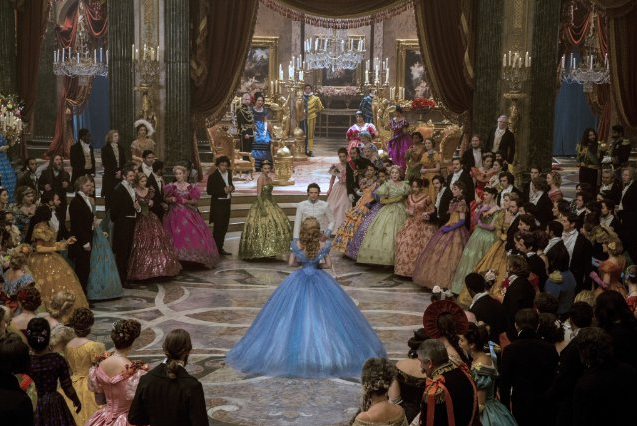
So the movies that get us out of the house are spectacles, and boy, did we ever choose the right one yesterday.  We saw Cinderella, and I have to tell you, I saw many little girls with their popcorns and sodas around me, but I guarantee that not one of them loved this movie as much as I did.  I laughed, I cried (really), and I was just stunned by the beauty of it all.  I figure plenty of CGI was utilized to make the backgrounds more than they actually are, but I didn’t care a whit.  To me, this is what CGI is supposed to be used for, not for having giant robots duke it out as if the fate of the planet depended on them (it doesn’t).

This is one of these movies that could’ve gone wrong in so many ways, but by some miracle none did.  Mostly I attribute this to Ken Branagh, whom I’ve always admired since seeing Dead Again.  His Hamlet was a sumptuous affair, so I knew he had the aesthetic chops — and after making Thor, I guess I should’ve realized Branagh can do anything.

Some very light spoilers below, so if you want a virgin experience, stop reading and go to the movies on this very fine Sunday.

The first twenty minutes or so of the movie is the weakest, but something clicks around the half-hour mark.  It might be because this is about when Cate Blanchett enters the narrative.  She is, as always, wonderful, and this part of the stepmother requires for her to be in every kind of mode — evil, fragile, hilarious, oftentimes within the same scene.  Initially I wasn’t sold on Lily James as Cinderella, but as the movie progressed, she won me over.  Of course I knew she would imbue innocence and goodness, but it’s her lack of perfection that really got me.  Let me explain: in the ballroom dancing scene, there’s a slight sense of the amateur in her movements, and that in itself lends a sense of vulnerability.

This movie is a total throwback in every sense of the word, and it’s the reason why it’s so good.  Look at the way Branagh uses closeups the few moments the two leads touch (the prince’s hand on her back during the dance, the glass slipper coming off on the swing).  The central theme of courage and kindness might rub some critics the wrong way, but if you let the movie take you, man, will it ever take you.

KoreAm Column: Welcome to the Club

erasure

My bi-monthy column for KoreAm Journal for March/April features the music of my youth, Erasure in particular.  Enjoy!

First-World Problems: Welcome to the Club

This past New Year’s Eve, I was on the second floor of Terminal 5, a concert hall in New York City’s Hell’s Kitchen. Leaning over the railing, I screamed, “I love to hate you!” with the rest of the frenzied crowd below me, above me, all around me. As the song reached its end, the singer segued into a countdown, and then he yelled, “Happy New Year!” Gold balloons and white confetti rained down from above, and then we all sang the next song, “I try to discover, a little something to make me sweeter …”

If you are of a certain age and Asian American, there’s a high likelihood that you know these two songs are “Love to Hate You” and “A Little Respect.” This was my first time seeing Erasure. I probably should’ve done this a quarter of a century ago, but back then, I didn’t even know who they were, and more to the point, I didn’t know who I was.

[more]


J. Robert Lennon’s See You in Paradise

Ilogo don’t write book reviews often — in fact, I’m lucky to write one a year.  But there’s one author I’ve reviewed more than once, and that is J. Robert Lennon.  If you haven’t checked out his latest, please do.  You’ll be thoroughly entertained.

From the always wonderful Fiction Writers Review.

See-You-in-Paradise-feature-image


See You in Paradise: Stories, by J. Robert Lennon

“Lennon not only balances the mundane with the fantastic, but makes the fantastic feel mundane in the context of this world”: Sung J. Woo on Robert J. Lennon’s new collection, See You in Paradise.

Maybe it’s strange for a reviewer of a collection of short stories to say that he is not a fan of short story collections, but I want you to know where I’m coming from. Don’t get me wrong—I love short stories. I love their intense focus, their fleeting brevity, an entire world contained and expressed in a few thousand words. What I don’t like is reading one after another by the same author, because I get tired of hearing the same voice over and over again. Also, reading another short story after having just finished one can feel like climbing a new mountain, because I have to get acquainted with another set of characters, and the setting is different, and so is the situation, and I miss those people from before…can’t they just come back and give me a break, please?

[more]

What Is Your Favorite Font?

gates

“What Is Your Favorite Font?”

If you were to ask this question to a hundred people, my guess is that you’d get a response that actually names a font.  Times Roman, Comic Sans, Helvetica, Arial, etc.  Chris Hardwick, the host of The Nerdist, posed this question to Bill Gates on his podcast a few days ago.

His answer: TrueType.  Gates then proceeded to describe the technical concept behind TrueType, something about using all three primary components of color (red, green, blue) to produce the best looking (“anti-aliased”) letters.  The TrueType standard was developed by Apple and Microsoft, and my initial reaction was, “Way to dodge the question and pump up your old company, Bill.”

And then I realized something — Gates wasn’t dodging anything.  TrueType really is his favorite font!  After this interview, looks like The Nerdist finally lives up to its name.

Stewart O’Nan’s West of Sunset

west of sunset

It’s a great day today, because a book I had the great privilege to read early is out: Stewart O’Nan’s West of Sunset. Here’s the 411:

In 1937, F. Scott Fitzgerald was a troubled, uncertain man whose literary success was long over. In poor health, with his wife consigned to a mental asylum and his finances in ruins, he struggled to make a new start as a screenwriter in Hollywood. By December 1940, he would be dead of a heart  attack.

Those last three years of Fitzgerald’s life, often obscured by the legend of his earlier Jazz Age glamour, are the focus of Stewart O’Nan’s gorgeously and gracefully written novel. With flashbacks to key moments from Fitzgerald’s past, the story follows him as he arrives on the MGM lot, falls in love with brassy gossip columnist Sheilah Graham, begins work on The Last Tycoon, and tries to maintain a semblance of family life with the absent Zelda and daughter, Scottie.

Fitzgerald’s orbit of literary fame and the Golden Age of Hollywood is brought vividly to life through the novel’s romantic cast of characters, from Dorothy Parker and Ernest Hemingway to Humphrey Bogart. A sympathetic and deeply personal portrait of a flawed man who never gave up in the end, even as his every wish and hope seemed thwarted, West of Sunset confirms O’Nan as “possibly our best working novelist” (Salon).

What I loved most about the novel is the utterly human portrayal of F. Scott Fitzgerald.  The Fitzgerald in West of Sunset is not a literary icon.  He’s just a guy with a tough job, a sick wife, and a daughter he hopes to keep in school with the few bucks he earns.  Which, as strange as it may sound, makes him even more heroic.

Stewart will be starting off his tour tonight at the Upper West Side Barnes & Noble, 7pm.  If you’re in the area, come on by!

Favorite Songs of 2014

“Even though we draw our lines / with very different ends”

Here’s a list of my top songs for this year, in an order that might be surprisingly mixable. These are not necessarily from 2014; I just happened to have heard them in the last twelve months.

Katie Herzig (The Walking Sleep) – Oh My Darlin’
Jessie Ware (Tough Love) – You and I (Forever)
Coldplay (Ghost Stories) – A Sky Full of Stars
Spoon (They Want My Soul) – Let Me Be Mine
Echosmith (Talking Dreams) – Nothing’s Wrong
Katie Herzig (Walk Through Walls) – Drug
American Authors (Oh, What a Life) – Hit It
Angus & Julia Stone (Angus & Julia Stone) – Get Home
Tennis (Ritual in Repeat) – Bad Girls
Delta Spirit (Delta Spirit) – Yamaha
Sam Smith (In the Lonely Hour) – Not in That Way
Ed Sheeran (X) – One
Katie Herzig (Walk Through Walls) – Human Too
Taylor Swift (1989) – Style
First Aid Kit (Stay Gold) – Heaven Knows
Bleachers (Strange Desire) – Rollercoaster
Tove Lo (Queen of the Clouds) – Timebomb
The New Pornographers (Brill Bruisers) – Champions of Red Wine
Stars (No One Is Lost) – This Is the Last Time
Jenny Lewis (The Voyager) – Just One of the Guys
Phosphorescent (Muchacho) – Ride on/Right on
Katie Herzig (Walk Through Walls) – Lines
Adam Levine (Begin Again) – Lost Stars

Katie Herzig makes four appearances here, and that number easily could’ve been ten.  I first heard her music in the show Rectify, the song “I Hurt Too,” which I later found out was also featured in the show Bones.  I guess her music translates really well to TV.  The standout this year is one of hers, “Lines,” which showcases her beautiful, fragile voice.

First-World Problems: The Forbidden Fruit

My third column for KoreAm is up!  This one is about two of my favorite subjects, Costco and my mother.

Costco is one of my mother’s favorite places in the world. As a child of the Korean War, scarcity has always carried psychological weight for her, and nothing buoys that heaviness like watching a forklift move a heaping pallet of fruit. I can still remember the first time I took her to the Costco warehouse in Ocean, New Jersey, where she was living at the time.

“America,” she’d said, pointing at the colors of the signage outside the building. It was true: COSTCO in red, WAREHOUSE in blue, the letters outlined in white.

And it was America on the inside, too, a muscular exhibition of capitalism. There was so much of everything—mounds of sweatshirts, pillars of pistachio nuts—and goods offered in such enormous sizes. My mother walked up to a display that looked like a fortress constructed of olive oil. Not only was each bottle a gallon in size, they were tied together in twos.

“I do need olive oil,” she said.

“It’ll take you five years to use that up!” I said.

She heaved the glistening duo into her cart.

“Yes, but you never know.”

[more]

11/18/14: Flash Fiction Reading

lafayette

I judged a Lafayette College flash fiction contest last month, and now it’s almost time to celebrate!  I’ll be reading from my own flash fiction, so if you are in the area (Easton, PA), please come on by.

Flash Fiction Reading

When:
Tuesday, November 18, 2014 – 7:00pm to 8:00pm

Where:
Gendebien Room, Skillman Library

Student winners of the 2014 Flash Fiction contest will read their work alongside the contest judge, writer Sung Woo. Refreshments will be served. Free and open to the public.

KoreAm Column: Missing What’s Loved and Lost

First-World Problems

I just realized my bi-monthly KoreAm column was actually posted two weeks ago.  It’s about my favorite local restaurant closing down…

Last week, my wife Dawn and I were two streets away from our home in Washington, New Jersey. We were behind several cars, waiting for the light to change, so we did what we always do—looked to our left, to Russo’s Ristorante, the beige building with a faded red canvas awning. On the door was a taped-up sign: “CLOSED FOR FAMILY EMERGENCY.”

[more]

I just drove by the old place today and a new restaurant has moved in: Juanito’s.  It’ll be a Mexican joint, and it looks like it’ll be opening soon.  I’m glad the space won’t go to waste, but it’s still kinda sad.

The Mysteries of Raymond Miller

coldI used to read a lot more genre fiction when I was younger.  In fact, that’s pretty much all I read: my mainstays were Stephen King for horror, Isaac Asimov for scifi, and Robert B. Parker for mysteries.  In college I was introduced to contemporary literary fiction, the likes of Raymond Carver and Denis Johnson, but I still read mysteries every so often.  I always found a great deal of comfort in how the authors wrote book after book using the same characters (Spenser) or a niche (like Dick Francis and horseracing).  If I ever considered writing as a profession, these folks seemed like the ones with steady jobs.

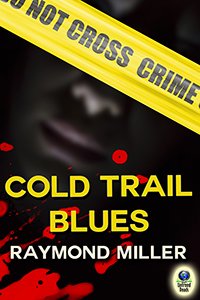
For the last year or so, I’ve been reading more mysteries than usual because that’s what I’m writing now (or, more accurately, attempting to).  And there’s one author I’ve really come to like, Raymond Miller.  His second book recently came out as an eBook , and it’s just as enticing as his first, A Scent of Blood.  Cold Trail Blues is the new one, and it continues the curious cases of Nathaniel Singer, private eye.  The heart of every work of noir is the voice of the narrator, and I can’t help but cheer for this guy.  He’s as tenacious as they come, but funny, too.  He’s got a gal named Kate, an MFA student, working for him as an assistant, and I can listen to their banter all day long.

The first novel dealt with a hit-and-run murder of a prominent doctor; Cold Trail Blues takes place in Waverly College, where a student has been accused of murdering his girlfriend.  The book is full of misdirection and action — even a pretty nifty car chase.  One of my favorite moments is when Kate talks to Singer about Paul Auster.

“I reread Paul Auster’s City of Glass trilogy over the weekend,” she said. “I felt as if I were preparing for a test.”

“I’m not familiar with it.”

“It’s a trilogy of postmodern detective novels.”

She explained the plot of one of them. A detective named Green is hired by a man named Brown to study the movements of a man named Black. Green takes a hotel room across the street from Black’s apartment and observes him through the window all day. But all Black does is write.

“What makes them postmodern?” I said. “Is it the plots? Or is the detective himself postmodern? Or is the bad guy postmodern?”

“I suppose you’d say it’s the plots themselves. They’re never resolved, and they never can be resolved.”

“Just sounds like bad detective work to me.”

I’m a big fan of City of Glass, but Singer’s response here is pitch perfect.  If Singer had been on the case, I bet he could’ve solved it.  By the way, Paul Auster wrote a fine regular mystery himself under the pseudonym of Paul Benjamin, Squeeze Play.  You can find it in his memoir Hand to Mouth.