Dream: An Interview, a Folder, The Donald

I’m waiting for a job interview, and in my hand is a folder containing something new and exciting that I plan to share with my future employer. But in the hallway with me is Donald Trump, who is wearing a black trenchcoat over a black suit and red tie. He looks massive, a giant, and he demands I hand over the folder to him, now. I refuse. I run. He chases me, his body almost fishtailing because he’s going so fast and he’s so heavy, bumping against the walls. If not for me sidestepping at the last possible second to pivot and change direction, he’d catch me. His enormous hands barely miss me, again and again. But each time it feels like he’s getting closer.

Then I wake up.

Haiku and Review: First Reformed

a man of God, lost
finding purpose in darkness
and bliss in a cup

The film begins with a perfectly centered shot of a church at dawn, the camera slowly pushing in as the sky lightens.

Within ten seconds, you know you’re in the hands of a pro, and the pro here is Paul Schrader.

In a way, this movie is reminiscent of one of Schrader’s earlier works, Taxi Driver, which he wrote.  I’m not usually a fan of voiceovers, but I make my exceptions with Schrader and Terrence Malick, because these aren’t really voiceovers per se.  Voiceovers can easily become a crutch in a film, the laziest way to info-dump, but in this movie, it serves to build character more than anything else.

The best thing you can do for yourself is to watch this movie with as little information as possible.  All I knew was that Ethan Hawke plays a priest (turns out to be a minister) who’s lost his way.  That’s all you need to know.

First Reformed is a work of art.  I think that’s the highest praise you can accord a film, and this movie deserves every bit.  Taxi Driver is a movie written by a young man; it possesses that raw, unbridled energy.  First Reformed is a movie written and directed by an older, wiser man, and it’s full of grace and beauty.  Best movie I’ve seen this year so far, hands down.

Dream, 11/29/2018: Tina, Ellie, Lance, and I

I’m in a massive dorm room with Tina Fey, Ellie Kemper, and a woman named Lance Gabriel who looks just like Anna Chlumsky. The women are all on their own twin beds as I chat with them. We are good friends. I tell them they should never leave school — we are all attending Cornell. I’m a senior. I suggest that with the money they have, they really never have to leave, and they find this notion hilarious. But, I warn them, if one of them decides to leave, it’s over; the pact/spell will be broken. The women look at me solemnly, understanding the gravity of my words.

Then Ellie, Lance, and I are at a basketball game. The teams are terrible…it takes more than ten minutes for somebody to score, the other team, the ones in blue. The guy is fouled as he takes the shot; the ball bounces around the rim a few times before it finally falls in. He swishes in the free throw to give the opponent a 3-0 edge. On the Cornell team, there’s a player who is supposed to be really good, but he’s got a bum leg. His entire leg looks like it’s in a cast. Ellie and Lance are ignoring me, so I leave.

Then I’m in the dining hall and I continue to feel like an outsider. So many diners, and yet I don’t know anyone, and I can’t buy anything because I don’t have a swipe-able meal card, even though I’ve signed up for a meal plan at the start of the semester. A card? I ask the cashier. Really, you still need a card in this day and age? I’m told to go to Willard Straight (the student union), so I go there, and there are two women and a student in a tiny office that resembles a gas station mart. The student looks at me with exasperation. He holds up his smartphone and says, Touch and Pay, right? Ugh.

One of the women, an old lady, asks me why it’s taken me so long to come here. I tell her it’s because I live off-campus, but she doesn’t buy my excuse. She and the other woman chat among themselves, intimating that it’s too late for me to get a card now.

And then I wake up.

postmortem

I know why Ellie Kemper is in this dream; it’s because I read her By the Book in the Times yesterday (how cool she’s a fan of Richard Yates!). But Tina Fey and Lance Gabriel, a.k.a. Anna Chlumsky? Welcome to nonsensical dream logic. And I think beds play a part because because I watched a CBS Sunday Morning segment last night about the history of the waterbed, which was fascinating.

11/2/2018 7:30pm: The Washing Society/Loads of Prose

Attention, friends and strangers who happen to live in the vicinity of NYC!  I’ll be at the Anthology Film Archives on Friday, 11/2 at 7:30pm, to take in the screening of the film The Washing Society and afterwards, I’ll be doing a reading in support of Emily Rubin‘s Loads of Prose.  My story is titled “The Best of the Vest,” and if you want to know what it’s about, come on by!

Here’s a trailer for the movie.

The Washing Society (trailer) by Lizzie Olesker and Lynne Sachs – 2018 from Lynne Sachs on Vimeo.

And here’s all the info you need for the event.

THE WASHING SOCIETY/LOADS OF PROSE
Screenings and Readings
Thursday and Friday November 1, 2 at 7:30

ANTHOLOGY FILM ARCHIVES
32 2nd Ave NYC NY 10003
212-505-5181
http://anthologyfilmarchives.org

The Washing Society
by Lizzie Olesker & Lynne Sachs
2018, 45 min, digital

Film Notes

SPECIAL SCREENINGS: ARTISTS & SPECIAL GUESTS IN PERSON!

Featuring laundry workers Wing Ho, Lula Holloway, and Margarita Lopez, and actors Ching Valdes-Aran, Jasmine Holloway, and Veraalba Santa.

THE WASHING SOCIETY brings us into New York City laundromats and reveals the experiences of the people working there. Filmmaker Lynne Sachs and playwright Lizzie Olesker collaborate to observe and investigate the disappearing public space of the neighborhood laundromat, and the continual labor that happens there. The intersection of history, immigration, and underpaid work is woven into the film’s observational moments and interviews, along with the uniquely public/private exchange of dirt, lint, stains, and money. The juxtaposition of narrative and documentary elements creates a dream-like, yet hyper-real portrayal of a day in the life of a laundry worker, both past and present.

Screening with:
Lizzie Olesker & Lynne Sachs DESPERTAR: NYC LAUNDRY WORKERS RISE UP (2018, 5 min, digital)

SPECIAL GUESTS:
Thurs, Nov 1:
Historian Tera Hunter, whose book TO ‘JOY MY FREEDOM depicts the 1881 organization of African-American laundresses in Atlanta, and Mahoma Lopez and Rosanna Rodriguez (Co-Directors, Laundry Workers Center), will join us to discuss justice in the workplace.

Fri, Nov 2:
‘Loads of Prose,’ a reading series staged in laundromats, presents authors Emily Rubin (STALINA, 2011), Sung J Woo (LOVE LOVE 2015, EVERYTHING ASIAN, 2009), and Christine Lewis (Organizer, Domestic Workers United), who will read their stories of hidden labor and the challenges of our changing neighborhoods, where infrastructures are crumbling due to the visceral and economic demands of gentrification.

And here’s a bit of lovely trivia — I watched the film Private Life this afternoon, written and directed by the always wonderful Tamara Jenkins.  It’s currently playing on Netflix, and how cool is it that the Anthology Film Archives is featured in the film!  Check out the screencap.

Private Life (2018)

On AAWW Radio

The fine folks at the Asian American Writers’ Workshop are featuring an event I did back in 2015!  Please give it and the other fine shows a listen.  Here’s how:

Website: http://aawwradio.libsyn.com/

Apple: https://apple.co/2M2eX1W

Google Play: https://bit.ly/2kTfRRU

Stitcher: https://bit.ly/2kUfZ3n

TuneIn Radio: http://tun.in/piGyv

RSS: http://aawwradio.libsyn.com/rss

Haiku and Review: Crazy Rich Asians


Ship on three towers

Asian leads in a rom-com

Wedding on water


It’s been a while since I’ve seen a good rom-com — for the uninitiated, that’s shorthand for romantic comedy.  Some of my favorites are Bridget Jones, Notting Hill, The Proposal, and the grandmommy of them all, Roman Holiday.  And in retrospect, that oldie is what Crazy Rich Asians reminds me of most, because at the core of it, this is a story of a commoner falling in love with royalty.  Nick Young may not be the prince of Singapore, but he’s the closest thing, and this is an extremely well-made fish-out-of-water story of Rachel Wu’s plight.  Much of the humor is supplied by her best friend Peik Lin, portrayed by the half Chinese, half Korean, entirely American and hilarious Awkwafina (with some choice assists from Ken Jeong playing her dad).

I don’t want to spoil a single thing, so I would just urge you to go see this in the theater.  It’s funny, heart-lifting, heart-rending, heart-everything.  I can’t believe there was a time when Michelle Yeoh was considered only an action star.  She’s so, so good here, her acting largely reserved, her reactions mostly minute — and yet she’s a gigantic presence.  The poster may be featuring the leads, but it’s Yeoh who’s the center of this film, and deservedly so.  Brava!

p.s. Yes, of course it’s a big deal that this is the first movie since The Joy Luck Club to feature an all-Asian cast.  But this film is so much more than a cultural signifier — it’s first and foremost a fine work of cinema.  So on that merit alone, it should be seen.  Though it absolutely bears mentioning that it took guts and sacrifices to put this up on the big screen — worth a read and then some: The Stakes Are High for ‘Crazy Rich Asians’ — And That’s the Point

Active Adverbs

Whenever things don’t go well on the writing front — that is, I find myself doing anything but writing when I’m supposed to be doing exactly that — I pick up my copy of The Collected Stories of Richard Yates.  He’s been my corrective for quite some time.

He’s a deceptively simple writer, a master of the unfettered prose.  And I swear, every time I read him again, I pick up something new.  Like here, a passage from the first story in the collection, “Doctor Jack-o’-Lantern.”  The story is about a new kid in class and his teacher, who thinks she’s helping him out, except she’s accomplishing exactly the opposite.

The last children to leave would see him still seated apologetically at his desk, holding his paper bag, and anyone who happened to straggle back later for a forgotten hat or sweater would surprise him in the middle of his meal — perhaps shielding a hard-boiled egg from view or wiping mayonnaise from his mouth with a furtive hand. It was a situation that Miss Price did not improve by walking up to him while the room was still half full of children and sitting prettily on the edge of the desk beside his, making it clear that she was cutting her own lunch hour short in order to be with him.

Adverbs are bad, we are told.  And yet, “seated apologetically at his desk” and “sitting prettily on the edge of the desk” — these adverbs are so active, so alive, that I think no, you absolutely can and should use adverbs, just like this.  Sparingly, strategically deployed.

Less, by Andrew Sean Greer

I did not know who Andrew Sean Greer was until I heard he’d won this year’s Pulitzer prize for fiction, and I continued to not know him and his sixth novel Less until I heard him read an excerpt in the New Yorker Radio Hour.  That was it; I was sold.  That short story was about Arthur Less, a nonfamous writer invited to Turin, Italy, by a minor literary prize, and it ran from one hilarious moment to the next.  Greer is one of these incredibly blessed people who just write funny.  Like how he describes the airplane lunch: “Tuscan chicken (whose ravishing name reveals itself, like an internet lover, to be mere chicken and mashed potatoes)”.

There are two things about Less that bear mentioning on a craft level (because they are absolutely crafty in the best sense of the word):

1) Greer sprinkles flashbacks judiciously throughout this novel, and he’s quite deft in the way he sneaks them in.  Example: in the last chapter, there’s this part: “…he sees a few people waiting on the dock, and among them — he recognizes her through her clear umbrella — is his mother.”  It’s not his mother, of course; rather, it’s a woman who is wearing a very similar scarf.  But this moment of misrecognition gives the reader the perfect way into this memory.

2) This novel is narrated by an unnamed character, one who acts in an omniscient manner about 95% of the time, but then there are these startling confessional first-person moments.  It’s so smart — Greer gets to have his cake and eat it, too, because he has the flexibility to play god and go wherever he wants, whenever he wants, and yet he also preserves the closeness of the first-person narrator when he wants to deliver an extra helping of heart.

This is just a wonderful novel, gentle and loving and funny and sad.  Unlike many literary novels, things actually happen in this book, lots of things, tons of things.  It is, after all, a travelogue of sorts, with Less jumping from country to country, continent to continent, to avoid his former lover’s wedding and his impending 50th birthday, so there’s serious propulsion in the narrative.

The writer Greer reminded me most was another favorite of mine, Brian Morton.  Fans of Starting Out in the Evening or A Window Across the River will find a great friend in Less.  I can’t wait to read the rest of Greer’s fiction.

Modern Love Podcast 102

credit: Michael Buckner/Deadline; Brian Rea/The New York Times/WBUR

Folks, this is one of the most amazing things that’s ever happened to me.  The Oscar-nominated duo behind last year’s film The Big Sick, Kumail Nanjiani and Emily V. Gordon, teamed up to perform my New York Times Modern Love essay.  It’s this week’s episode, which is doubly special because it’s Valentine’s Day!

Here’s the podcast!!!

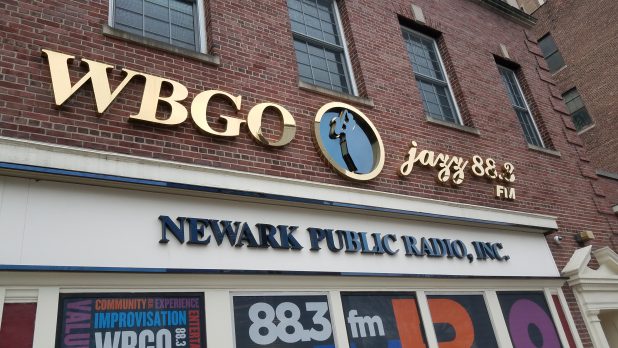
Much thanks to the great people at WBUR (where Modern Love the Podcast is made), especially Caitlin O’Keefe who was gracious and patient as I prattled on during our interview.  Also thanks to WBGO for hosting me and providing crystal-clear communication between Newark and Boston.  Huge thanks to Dan Jones and The New York Times for publishing my essay in the first place.

Lastly, thank you to my wife Dawn and my mother, who provided the fodder for my essay. 🙂

Favorite Songs of 2017

It’s still January, so not too egregiously late: Here’s a list of my top songs for this year, in an order that might be surprisingly mixable. These are not necessarily from 2017; I just happened to have heard them in the last twelve months.

Paris, by The Chainsmokers on Memories…Do Not Open
On Hold, by The xx on I See You
Should’ve Been You, by Imelda May on Life Love Flesh Blood
Castle on the Hill, by Ed Sheeran on Divide
Want You Back, by HAIM on Something to Tell You
Ride, by Twenty One Pilots on Blurryface
Cleopatra, by The Lumineers on Cleopatra
Fault Line, by Michelle Branch on Hopeless Romantic
Walk on, by Overcoats on YOUNG
Liability, by Lorde on Melodrama
Making Love Out of Nothing at All, by Air Supply on Definitive Collection
New York, by St. Vincent on MASSEDUCTION
Beautiful Trauma, by Pink on Beautiful Trauma
Love Me Like You Do, by Ellie Goulding on Delirium
Sign of the Times, by Harry Styles on Harry Styles
The Industry, by Okkervil River on Away
Don’t Take the Money, by Bleachers on Gone Now
White Flag, by Joseph on I’m Alone, No You’re Not
Ordinary World, by Green Day on Revolution Radio
Tachycardia, by Conor Oberst on Ruminations
Apocalypse, by Cigarettes After Sex on Cigarettes After Sex

I don’t know if any one particular song stands out here — maybe Lorde’s “Liability”?  Or perhaps The xx’s “On Hold.”  Let’s just call it a tie, because they’re both wonderful.